English/US



The challenge is to bridge the gap between science and practice without compromising intellectual autonomy, in-depth reflection, or the quality of contributions.
 In 2026, the Brazilian Academy of Management (ANPAD) will mark its 50th anniversary. This milestone has prompted an important discussion about the future of research in Administration in Brazil over the next five decades. The central question is how to bring academic knowledge closer to the problems organizations and society face without subordinating the research agenda to market urgencies.
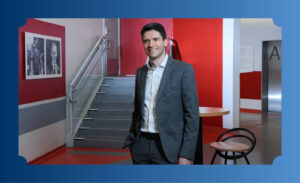
In the following interview, Guilherme Fowler A. Monteiro examines the challenges of bridging that gap. An Associate Professor at Insper and Director of its Academic Unit of Management and Economics, he holds a PhD in Administration from the University of São Paulo (USP) and conducts research in institutional and organizational economics, with applications in strategy, governance, and entrepreneurship. Here, Monteiro discusses the relationship between rigor and relevance, dialogue with organizations, the use of artificial intelligence (AI), and the training of future generations of researchers.
Professor, given the relationship among academia, organizations, and society, what needs to change going forward?
I do not think anything needs to change structurally. That does not mean everything is fine, however. The dialogue among academia, organizations, and society has deepened, but it still needs improvement.
Although the subject matter of Administration and related fields is fundamentally organizations, the “pace of academia” is distinct: it is slower. For research to play a relevant role, it must manage the tension between publication timelines and executives’ timelines. It is not a matter of choosing one over the other but of navigating between them more effectively. Of course, I mean publication in high-impact journals, not predatory ones.
Relatedly, academia needs to engage more effectively with practice, and that does not mean sacrificing rigor; quite the opposite. We should apply methodological rigor to the search for answers to questions that matter for practice, without giving up our autonomy or our curiosity about underexplored phenomena. This is another tension we need to address better.
For years, we have heard that academia and the market need to come closer together. Is that diagnosis still accurate?
Closer ties are always welcome. What stands out, though, is the time issue. Here, one topic is gaining prominence: academics’ use of AI tools to speed up publication.
I am not against using AI; I use it myself. But I have reservations about those who delegate nearly the entire production of an article to an agent, including the writing. This obviously speeds publication and may ease the “time tension.” Yet intellectual work should, to some extent, be a craft, an analog process. A researcher who relies solely on AI and becomes ultra-productive may be building a house of cards. How much of their analytical capacity remains if access to AI is compromised for any reason? If the answer is “very little,” we may have a problem.
Is there a tension between producing scientifically rigorous knowledge and researching questions that matter to managers, organizations, and policymakers?
There is, and it has two facets. On the one hand, researchers cannot become detached from the pain points and issues that drive organizations. Doing so means avoiding dialogue with practice. On the other hand, the demands of organizations should not be the sole guide for research. Academia also needs room to explore questions beyond organizations’ immediate focus. Just because organizations are not attentive to a given topic does not mean it cannot affect them, and therefore it deserves researchers’ focused attention.
Is the market a source of good research questions?
Without contact with the market, researchers tend to lose touch with how organizations actually operate. This holds true even for those who work mostly with secondary data or theoretical research. If researchers do not seek to connect their findings, whatever their nature, to “reality” (the market), what kind of impact can we expect from research in Administration?
At Insper, for example, the Paulo Cunha Innovation and Entrepreneurship Hub is one channel through which we build these relationships. Companies present concrete challenges faced by organizations or by society and seek solutions developed through partnerships and projects involving students, faculty, and mentors. This engagement helps us better understand what is happening in the market and identify issues that can give rise to new research questions.
And in the opposite direction: what can academic research offer to organizations?
There are two important differences here. Consider consultancies, whether internal or external: academic research offers a level of rigor that only its temporal detachment makes possible. Certain topics demand deep analysis and reflection, which naturally take longer. So, there are, in effect, two “markets” in which consultancies and academic research can coexist. At the same time, and no less important, academic research, by its nature, is committed to the research question. The question guides the effort, regardless of whether the organization likes the answer.
Now consider executives, for whom another issue is at play. Executives are a highly valuable source of information and insight because they are immersed in a particular organizational context. For that very reason, however, they cannot take everything in; our rationality is bounded. An “outsider’s” perspective, trained to look for “interesting problems,” with rigor and a commitment to finding answers, can add a great deal, provided that both the executive and the researcher are open to different perspectives.
Today, new research possibilities stem from large databases, computational methods, field experiments, and artificial intelligence. Could these tools change the relationship between researchers and organizations?
These are cutting-edge topics. This is where the action is, making it harder to predict anything concretely. As both academia and organizations gravitate toward these tools, it is natural that the relationship between researchers and organizations will shift to some extent. Perhaps “transaction costs” at the research-organization interface will fall. Organizations may begin to internalize some functions they used to delegate to researchers. In that case, academics will need to consider what they can truly contribute to organizations.
What role do master’s and doctoral programs play in this? Are we training researchers to speak to different audiences, or only to other researchers?
Master’s and doctoral programs play a very important role. They give students the opportunity not only to develop and refine technical knowledge but also to pursue a research question in a stimulating environment of intellectual exchange. Research is solitary insofar as the researcher confronts a given question alone. Yet being among people who are on the same path always creates a particular kind of connection and exchange. This human dimension of the programs should never be underestimated.
At Insper, we value the integration of professional experience, research, and analytical rigor. In our stricto sensu graduate programs, this combination takes different forms: the Professional Master’s in Administration, which is celebrating its 20th anniversary, engages primarily with the business world; the Master’s in Public Policy engages with the public and third sectors; and the research tracks of the Professional Doctorate in Administration address questions from both the business world and the public sector. In all of them, we aim to train researchers who are capable of engaging with diverse audiences, not just their peers in academia.
What do you hope future generations will see in the transformation of research in Administration over the next 50 years?
I hope they can look back and see that Brazilian research in Administration succeeded in drawing closer to the international academic community and establishing itself within it, and that we expanded our reach in a structured and consistent manner.